There was a time when an outdoor kitchen meant a grill, a countertop, and a prayer for good weather. That time is over. The 2026 numbers say the backyard has quietly become a second kitchen — bigger, better equipped, and built from scratch — and this week the ventilation industry finally caught up with a hood powerful enough to clear the air above it.
📈 The numbers: $19,355, and it's not inflation
RTA Outdoor Living's newly released 2026 Cost Study puts the median outdoor-kitchen order at $19,355, up 17.9% from $16,409 in 2025 — while total orders grew 20.8% in the first three quarters of the year. The surprising part is what drove the jump: only about 30% of it was price increases. The other 70% was homeowners choosing bigger footprints, higher specifications, and more appliances.
The appliance mix tells the story. Refrigerators are now the most common addition, in 60.3% of orders. Sinks posted the biggest gain of any category, jumping to 30.5% of orders from 24.5% last year. Griddles rose to 21.8%, pizza ovens to 13.0% (from 9.7%), and smokers to 8.0% (from 6.5%). The grill is still the anchor — every major category grew — but it no longer cooks alone. The 2026 Houzz Outdoor Trends Study adds the kicker: 95% of homeowners adding an outdoor kitchen are building one from scratch, not bolting extras onto an old setup.
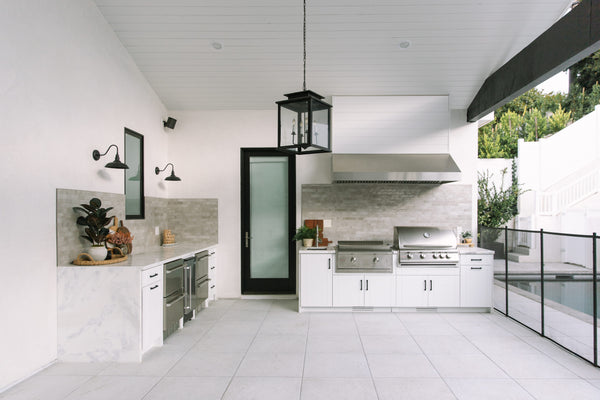
💨 The hood that answers it: Proline BBQ Ultra HE, up to 3,400 CFM
On October 23, 2026, Proline Range Hoods launched the BBQ Ultra HE, its highest-airflow outdoor hood ever. Where most residential outdoor hoods are rated 1,200 to 2,000 CFM — and Proline's own BBQ Pro and BBQ Ultra models have sat at 2,000 CFM since 2024 — the HE line offers three configurations: 2,400, 2,600 and 3,400 CFM. That's a 20%, 30% and 70% jump over the old ceiling.
The 2,400 CFM setup uses two 1,200 CFM blowers mounted in the hood and comes in both under-cabinet and wall-mounted models. The 2,600 CFM setup moves its two 1,300 CFM blowers out of the hood entirely — remote inline blowers installed in an attic or along the duct run, taking most of the motor noise out of the cooking area. The flagship 3,400 CFM setup pairs two 1,700 CFM blowers and is available on the 60- and 72-inch under-cabinet models.
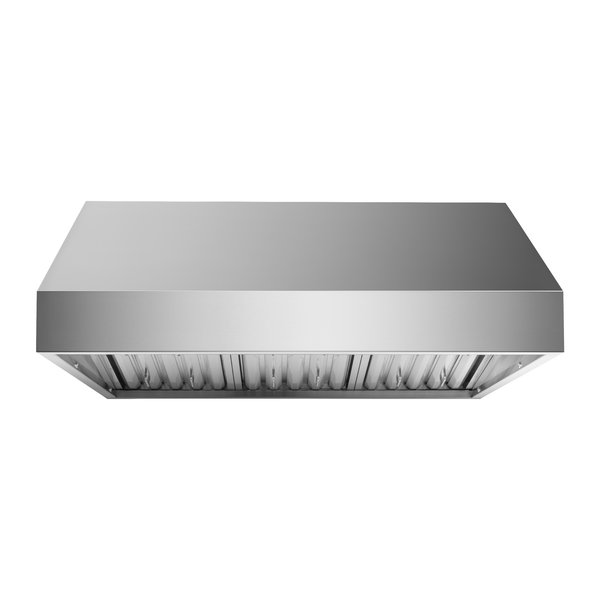
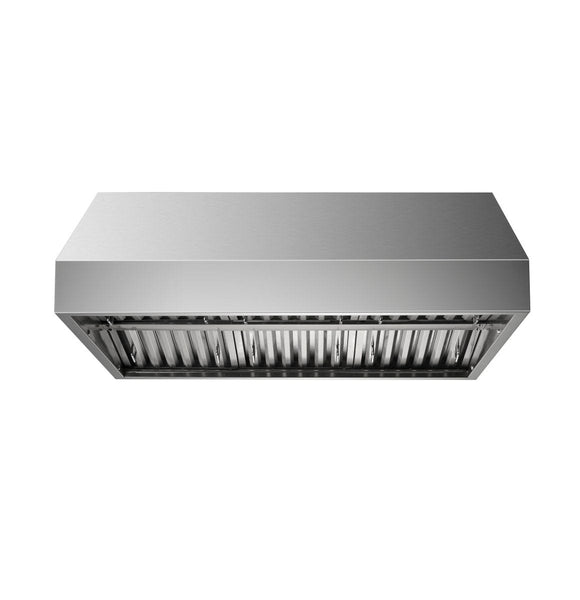
Two details matter more than the headline number. First, the high-efficiency blowers draw roughly half the amperage of Proline's standard four-speed motors, even at full speed — more air for less power. Second, airflow is fully variable on a single knob instead of four fixed speeds: a smoker running low and slow for hours can sit at a light, steady draw, and a full-heat sear gets everything the hood has with a twist. The hoods come 42 to 72 inches wide and 36 inches deep — deep enough to reach over the front of the grill, where smoke rises when a lid opens — in 1.2 mm 304 stainless with dishwasher-safe baffle filters and dimmable LED lighting. Listed pricing on Proline's US site starts at $2,999.99 for the under-cabinet model and $3,299.99 for the wall-mounted model.
Why airflow had to jump
The logic is simple and hard to argue with: more cooking surface under one roof means more smoke and grease, and a covered roof traps both. A single grill's plume was a 2,000 CFM problem. A grill plus a griddle plus a pizza oven plus a smoker, all firing during one cookout, is a different problem — and it gets worse the nicer the roof is. Proline's sales manager Carson Zuro put it plainly at launch: outdoor kitchens keep getting bigger, with more appliances and more grill combinations going in, and the CFM they need keeps going up with them.
What this means in Calgary
Calgary's built-in crowd already lives this trend: Fire Magic, Napoleon and Wolf grills set into outdoor kitchens, increasingly under covered roofs, increasingly with a griddle or a pizza oven beside them. The honest corollary nobody in the hood business will print is that more appliances mean more grease to look after. A bigger station collects it faster — in the cookbox, in the drip system, and on every stainless surface the hood is trying to keep clear.
That's our corner of the trend. We don't sell hoods, and we don't install outdoor kitchens — we deep-clean the grill station that lives under that roof, so the expensive setup keeps cooking the way it did on day one. And a seasonal note for Calgary built-in owners: our regular BBQ season is closed for the year, with emergency service open through winter, so a built-in that starts acting up in a cold snap still has someone to call.
One thing hasn't changed
The grill is still the anchor. Every study in this story says the same thing: refrigerators, sinks, griddles and pizza ovens all grew, but the grill is what the whole second kitchen is built around. The hood just got bigger because the kitchen did. So tell us on Facebook: what's under your roof — grill only, or the full second kitchen? 👇